
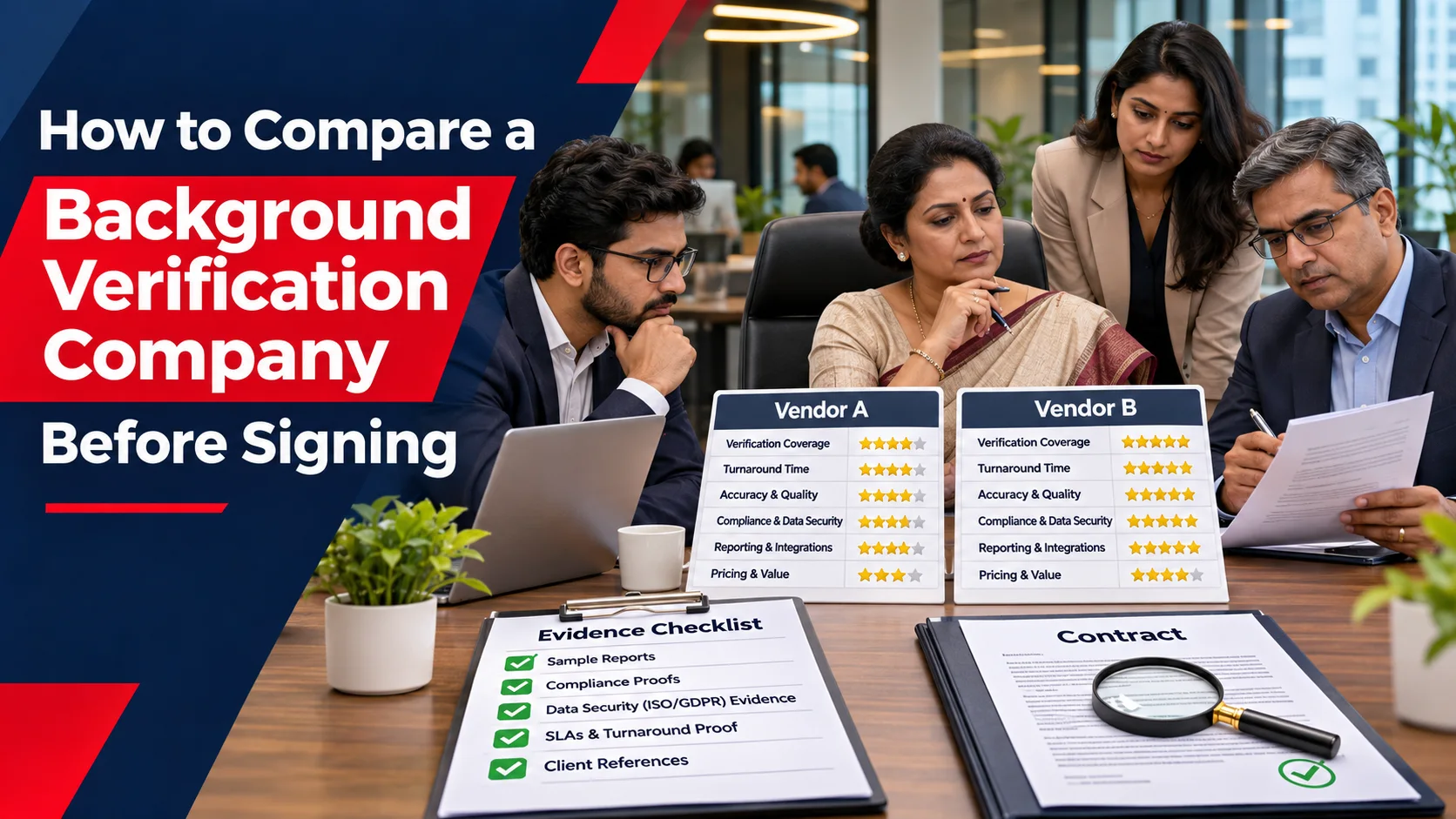
Comparing a background verification company becomes easier when every shortlisted provider receives the same requirement. A general request for a rate per candidate rarely shows whether you are comparing equivalent work.
Prepare a sample scope with the number of candidates, employers, qualifications and addresses. Add any reporting requirements or restrictions on contacting current employers. This brief gives the comparison a consistent starting point.
Test the process with two fictional cases
Use one simple case in which all requested sources respond. Then introduce an exception: an employer confirms dates but refuses other fields, or a qualification remains unanswered. Ask each provider to explain how those cases move from intake to release.
You are looking for a defensible process, not the most confident sales answer. The provider should distinguish completed work, pending information and unresolved evidence.
Compare these five areas
Area | Ask the provider | Compare the answer against |
|---|---|---|
Coverage | Which records and methods are included? | Your written scope |
Reporting | What can the hiring team see? | An illustrative report |
Exceptions | Who owns missing information? | A named escalation route |
Data handling | Who sees each document? | The actual access model |
Commercials | What triggers an extra charge? | Written exclusions |
Do not accept a broad security claim as the complete answer to the access question. Ask how access is granted, reviewed and removed, including vendor access and exported reports.
Examine the reporting language
Ask whether “verified” means every requested field was confirmed or only that a check was attempted. Examine how the report describes name variations, partial responses and source non-response.
If a provider cannot show the distinction, your hiring team may need to reconstruct the finding from emails. That creates avoidable ambiguity at the decision stage.
Discuss service quality before discounts
A discount does not resolve unclear scope. Establish the number of follow-ups, source dependencies, correction process and report recipients before discussing the final commercial arrangement.
Where a delivery promise depends on complete records, agree what “complete” means. Your team should know whether the clock starts at case creation or after all required inputs arrive.
Make the selection reviewable
Keep a short decision record explaining why the selected provider fits your programme. Include unresolved questions and the person responsible for closing them. This makes onboarding easier when the buyer and the daily operations team are different people.
Use the ZenNextVerify workflow to frame a process discussion, and request a scoped conversation before finalising checks. This checklist evaluates fit; it does not rank providers or claim that one package suits every employer